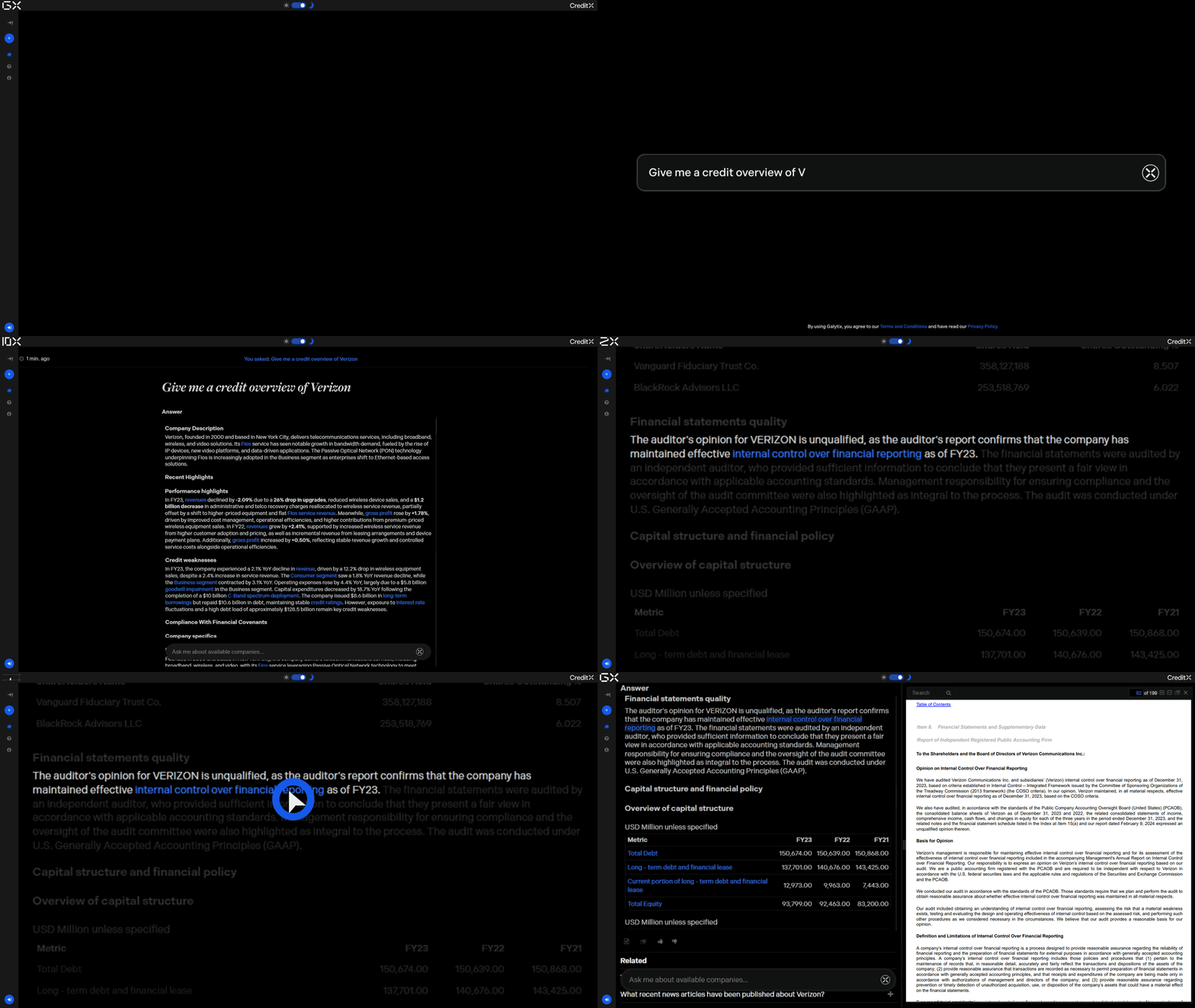
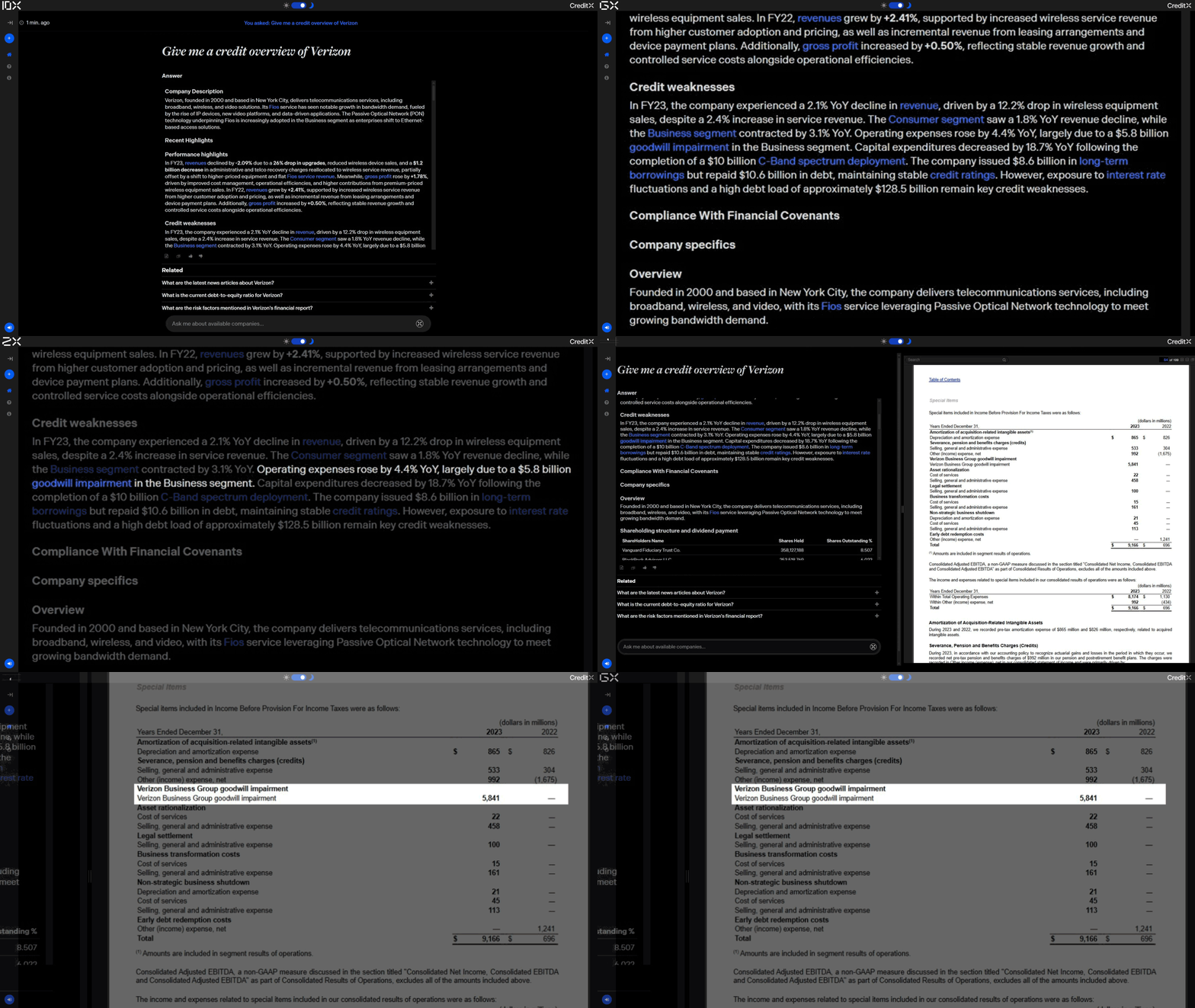
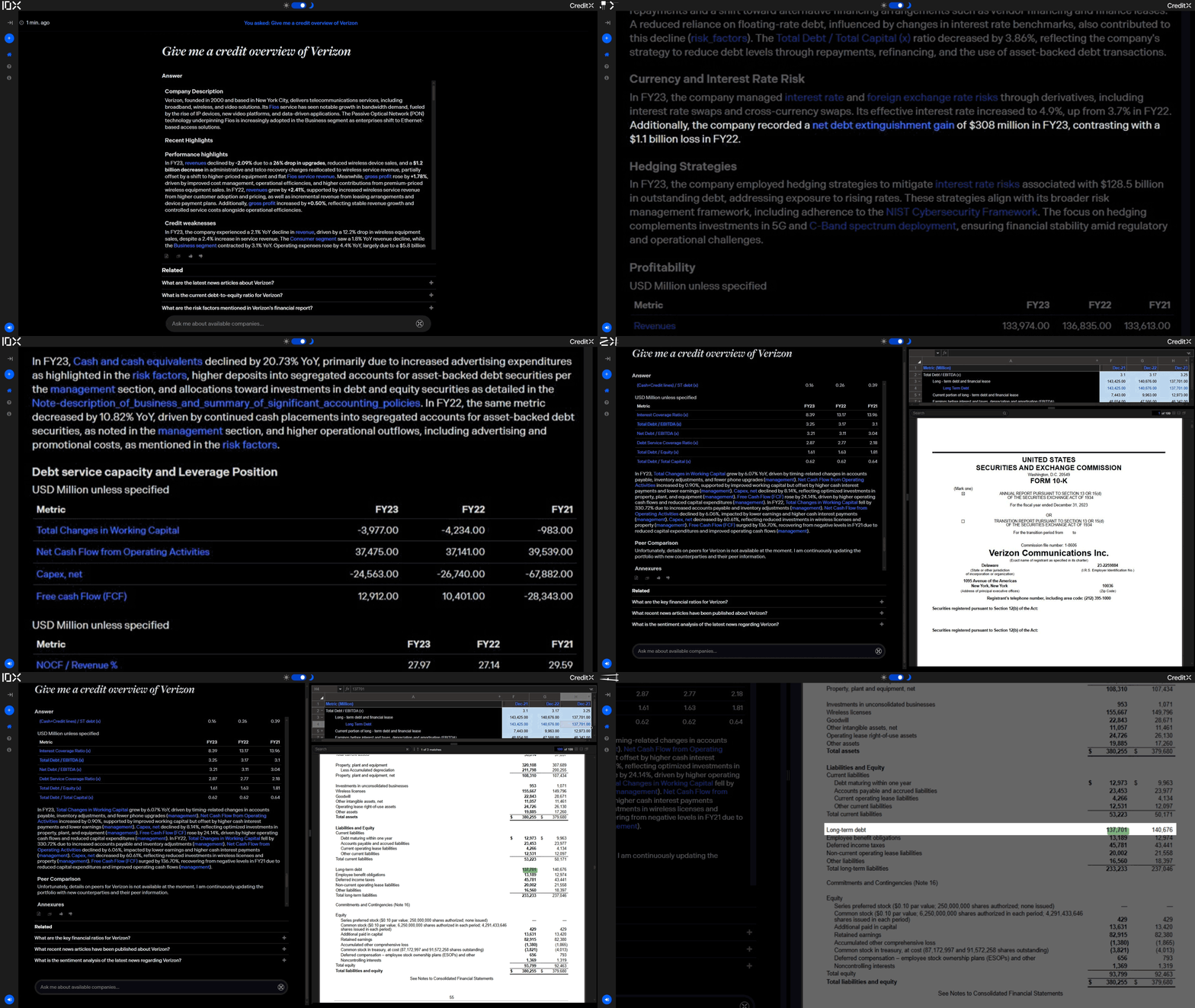
Company Description
Tesla, Inc., established in 2003 and headquartered in Texas, designs, develops, manufactures, sells, and leases high-performance fully electric vehicles and energy generation and storage systems. The company operates through two main segments: automotive and energy generation and storage. Its mission is to accelerate the world’s transition to sustainable energy, leveraging engineering expertise and a vertically integrated business model. The company expands its global infrastructure, including service centers and charging stations, while developing full self-driving technology for enhanced safety.
Recent Highlights
Performance highlights
In FY24, revenues increased by 0.95% to USD 97,690.0 million, driven by a significant rise in energy generation and storage revenue and services and other revenue, despite a decrease in automotive sales revenue. Gross profit rose by 2.20% to USD 22,818.0 million, supported by lower costs in automotive sales. In FY23, revenues grew by 18.80% to USD 96,773.0 million, largely due to increased demand for automotive regulatory credits and energy revenue, while gross profit decreased by 9.24% to USD 22,327.0 million due to higher production costs. In Q324, revenues increased by 0.53% to USD 71,983.0 million, driven by growth in energy and services revenue, and gross profit rose by 2.92% to USD 17,143.0 million, aided by reduced costs in automotive leasing.
Credit weaknesses
In FY24, the company faces significant foreign currency risks due to its international operations, with a potential impact of USD 1.15 billion from a 10% adverse change in exchange rates, assuming no hedging. This risk was USD 1.01 billion in FY23 and USD 473 million in FY22. The company does not typically hedge against these risks, which affects its operating results. Additionally, it is exposed to interest rate risk on its floating rate debt, with a hypothetical 10% change in interest rates potentially altering interest expenses by USD 2 million in FY21. These financial vulnerabilities, coupled with challenges in production ramp-up, supply chain management, and strong market competition, highlight the credit weaknesses impacting its operations and profitability.
Compliance With Financial Covenants
Company specifics
Overview
Tesla, Inc., established in 2003 and headquartered in Texas, designs and manufactures electric vehicles and energy systems, operating through automotive and energy segments.
Shareholding structure and dividend payment
| ShareHolders Name |
Shares Held |
Shares Outstanding % |
| Elon Musk |
410,794,076 |
12.8 |
| Vanguard Fiduciary Trust Co. |
243,193,181 |
7.576 |
| BlackRock Advisors LLC |
153,685,950 |
4.788 |
| STATE STREET CORPORATION |
112,211,396 |
3.496 |
| Geode Capital Management LLC |
61,011,604 |
1.901 |
As of February 25, 2025, the top shareholders for Tesla include Elon Musk, who holds 410,794,076 shares, representing 12.8% of the shares outstanding. Vanguard Fiduciary Trust Co. follows with 243,193,181 shares, accounting for 7.58% of the shares outstanding, and BlackRock Advisors LLC holds 153,685,950 shares, which is 4.79% of the shares outstanding. This shareholding pattern indicates a significant concentration of ownership among these top shareholders, with Elon Musk having a substantial influence due to his large shareholding.
Management & Governance Structure
Tesla's top management includes Vaibhav Taneja, who serves as the Director of Finance and CFO. The company also has Thomas Zhu and Natasha Mahmoudian in roles as Corporate Officers/Principals. Additionally, Brandon Ehrhart holds the position of General Counsel.
Business risk profile
The business risk profile of the company is influenced by challenges in scaling production due to supplier issues and the need for efficient manufacturing processes across its global facilities. Its growth strategy depends on increasing mass-market vehicle production, necessitating significant lithium-ion battery cell production and partnerships with suppliers. The company faces competition from both established and new entrants in the electric vehicle market, impacting market share and profitability. Additionally, it is subject to various regulatory, political, and economic conditions globally, affecting product sales and cost management. For more insights, refer to the annual report and additional context.
Diversification and scale
In FY24, Tesla's diversification and scale efforts were evident as it produced approximately 1,773,000 consumer vehicles and delivered about 1,789,000 vehicles, focusing on leveraging existing factories for new, affordable products and expanding global infrastructure. The energy storage products deployment reached 31.4 GWh, emphasizing production ramp-up and market penetration. Total revenues were USD 97.69 billion, up by USD 917 million from the previous year, while net income decreased by USD 7.91 billion due to a significant tax-related valuation allowance release. Cash and investments increased by USD 7.47 billion, totaling USD 36.56 billion.
Competitive position and growth potential
The company leverages its engineering expertise and vertically integrated business model to differentiate itself in the competitive electric vehicle and energy sectors. It emphasizes performance, styling, and safety, while developing full self-driving technology. The firm aims to lower ownership costs by reducing manufacturing expenses and offering tailored financial services. It faces competition from both established and new manufacturers in the automotive market and from various players in the energy sector. For more details, refer to Tesla's annual report and competition analysis.
Financial Performance
Financial statements quality
The auditor's opinion for TESLA is unqualified, as the auditor's report indicates that the company has maintained effective internal control over financial reporting as of December 31, 2023, based on criteria established by the Committee of Sponsoring Organizations of the Treadway Commission (COSO) (source). The financial statements were audited by PricewaterhouseCoopers LLP, which has been the auditor since 2005, ensuring a fair view and sufficient information for stakeholders. The management's responsibility includes maintaining effective internal controls, which is crucial for the audit committee's oversight. The applicable accounting standards include the criteria established by COSO, reflecting the company's commitment to transparency and accuracy in financial reporting.
Capital structure and financial policy
Overview of capital structure
USD Million unless specified
| Metric |
FY24 |
FY23 |
FY22 |
3Q24 |
| Total Debt |
8,213.00 |
5,230.00 |
3,099.00 |
7,696.00 |
| Long - term debt and financial lease |
5,757.00 |
2,857.00 |
1,597.00 |
5,405.00 |
| Current portion of long - term debt and financial lease |
2,456.00 |
2,373.00 |
1,502.00 |
2,291.00 |
| Total Equity |
73,680.00 |
63,609.00 |
45,898.00 |
70,710.00 |
USD Million unless specified
| Metric |
FY24 |
FY23 |
FY22 |
3Q24 |
| Total Debt / Equity (x) |
0.11 |
0.08 |
0.07 |
0.11 |
| Total Debt / Total Capital (x) |
0.10 |
0.08 |
0.06 |
0.10 |
In FY24, the Total Debt / Equity ratio increased to 0.11, and the Total Debt / Total Capital ratio rose to 0.10, driven by a rise in total debt and finance leases to USD 5,757 million, with significant contributions from automotive asset-backed notes and the China Working Capital Facility. In FY23, the Total Debt / Equity ratio was 0.08, and the Total Debt / Total Capital ratio was 0.07, attributed to an increase in total liabilities to USD 3,777 million, driven by higher current and long-term debt and finance leases. In Q324, the Total Debt / Equity ratio was 0.10, and the Total Debt / Total Capital ratio was 0.09, reflecting current liabilities of USD 1,973 million and total debt and finance leases of USD 5,405 million, with a notable increase in non-recourse debt.
Currency and Interest Rate Risk
The company faces currency and interest rate risks due to its global operations and reliance on international suppliers and markets. Fluctuations in foreign exchange rates can impact the cost of production and profitability, especially with facilities in China and Germany. Additionally, changes in interest rates could affect the cost of financing for expansion and production ramp-up. Managing these risks is crucial for maintaining competitive pricing and profitability in the electric vehicle market. Source Source.
Hedging Strategies
In FY24, the potential impact of a 10% adverse change in exchange rates on net income was USD 1.15 billion, compared to USD 1.01 billion in FY23 and USD 473 million in FY22, indicating significant foreign exchange rate risk. The company does not typically hedge against these foreign currency risks, which can significantly impact its financials. Additionally, it faced interest rate risk on floating rate debt, potentially altering interest expense by USD 2 million in FY21.
Profitability
USD Million unless specified
| Metric |
FY24 |
FY23 |
FY22 |
3Q24 |
3Q23 |
| Revenues |
97,690.00 |
96,773.00 |
81,462.00 |
71,983.00 |
71,606.00 |
| Gross Profit |
22,818.00 |
22,327.00 |
24,600.00 |
17,143.00 |
16,657.00 |
| Gross Margin (%) |
23.36 |
23.07 |
30.20 |
23.82 |
23.26 |
| EBITDA |
12,444.00 |
13,558.00 |
17,403.00 |
9,365.00 |
10,262.00 |
| EBITDA Margin (%) |
12.74 |
14.01 |
21.36 |
13.01 |
14.33 |
| Net Profit/Loss |
7,153.00 |
14,974.00 |
12,587.00 |
4,821.00 |
7,031.00 |
| Net Margin (%) |
7.32 |
15.47 |
15.45 |
6.70 |
9.82 |
In FY24, revenues increased by 0.95% to USD 97,690.0 million, driven by a significant rise in energy generation and storage revenue and services and other revenue, despite a decrease in automotive sales revenue. The gross margin rose by 1.24% due to lower raw material costs, while the EBITDA margin fell by 9.08% due to increased Cybertruck costs. The net margin decreased by 52.68% due to the previous year's tax asset valuation allowance release. In FY23, revenues grew by 18.80% to USD 96,773.0 million, driven by increased demand for automotive regulatory credits and energy revenue. The gross margin decreased by 23.60% due to lower vehicle selling prices, while the EBITDA margin fell by 34.42% due to lower automotive sales and higher operational costs. The net margin slightly increased by 0.14% due to the release of deferred tax asset valuation allowance. In Q324, revenues rose by 0.53% to USD 71,983.0 million, driven by higher energy and services revenue. The gross margin increased by 2.38% due to lower vehicle costs and increased FSD revenue, while the EBITDA margin decreased by 9.22% due to lower automotive sales and higher operational costs. The net margin decreased by 31.79% due to lower net income attributable to common stockholders.
Liquidity position
USD Million unless specified
| Metric |
FY24 |
FY23 |
FY22 |
3Q24 |
| Cash and cash equivalents |
16,139.00 |
16,398.00 |
16,253.00 |
18,111.00 |
| Undrawn Committed Debt |
5,000.00 |
5,000.00 |
5,000.00 |
5,000.00 |
In FY24, cash and cash equivalents decreased by 1.58% YoY to USD 16,139.0 million, attributed to a reduction in U.S. government securities and corporate debt securities, as detailed here. Undrawn Committed Debt remained stable at USD 5,000.0 million due to the RCF Credit Agreement, as mentioned here. In FY23, cash and cash equivalents increased by 0.89% YoY to USD 16,398.0 million, driven by higher balances in certificates of deposit and time deposits, as detailed here. Undrawn Committed Debt was unchanged at USD 5,000.0 million due to the RCF Credit Agreement, as mentioned here. In Q324, cash and cash equivalents rose to USD 18,111.0 million due to higher balances in money market funds and commercial paper, as detailed here. Undrawn Committed Debt remained stable at USD 5,000.0 million due to the RCF Credit Agreement, as mentioned here.
Debt service capacity and Leverage Position
USD Million unless specified
| Metric |
FY24 |
FY23 |
FY22 |
3Q24 |
3Q23 |
| Total Changes in Working Capital |
81.00 |
-2,248.00 |
-3,712.00 |
-949.00 |
-2,730.00 |
| Net Cash Flow from Operating Activities |
14,923.00 |
13,256.00 |
14,724.00 |
10,109.00 |
8,886.00 |
| Capex, net |
-11,342.00 |
-8,899.00 |
-6,236.00 |
-8,562.00 |
-6,592.00 |
| Free cash Flow (FCF) |
3,581.00 |
4,357.00 |
8,488.00 |
1,547.00 |
2,294.00 |
USD Million unless specified
| Metric |
FY24 |
FY23 |
FY22 |
3Q24 |
3Q23 |
| NOCF / Revenue % |
15.28 |
13.7 |
18.07 |
14.04 |
12.41 |
| (Cash + Credit lines) / ST debt (x) |
8.61 |
9.02 |
14.15 |
10.09 |
0 |
USD Million unless specified
| Metric |
FY24 |
FY23 |
FY22 |
3Q24 |
3Q23 |
| Interest Coverage Ratio (x) |
35.55 |
86.91 |
91.12 |
36.87 |
108.02 |
| Total Debt / EBITDA (x) |
0.66 |
0.39 |
0.18 |
0.82 |
0 |
| Net Debt / EBITDA (x) |
-0.64 |
-0.82 |
-0.76 |
-1.11 |
0 |
| Debt Service Coverage Ratio (x) |
35.55 |
86.91 |
91.12 |
36.87 |
108.02 |
| Total Debt / Equity (x) |
0.11 |
0.08 |
0.07 |
0.11 |
0 |
| Total Debt / Total Capital (x) |
0.10 |
0.08 |
0.06 |
0.10 |
0 |
In FY24, Net Cash Flow from Operating Activities increased by 12.58% to USD 14,923.0 million, driven by higher revenues and operational efficiencies despite tax-related net income reductions as noted in the strategy document. Capex, net rose by 27.45% to USD -11,342.0 million due to investments in property, plant, and equipment, while Free Cash Flow (FCF) decreased by 17.81% to USD 3,581.0 million due to increased capital expenditures. In FY23, Net Cash Flow from Operating Activities decreased by 9.97% to USD 13,256.0 million due to lower net income, while Capex, net increased by 42.70% to USD -8,899.0 million due to investments in property, plant, and equipment. Free Cash Flow (FCF) decreased by 48.67% to USD 4,357.0 million due to increased capital expenditures and lower operating cash flows. In Q324, Net Cash Flow from Operating Activities increased by 13.76% to USD 10,109.0 million due to improved operational efficiencies and higher revenues, while Capex, net increased by 29.88% to USD -8,562.0 million due to ongoing investments in property, plant, and equipment. Free Cash Flow (FCF) decreased by 32.56% to USD 1,547.0 million due to increased capital expenditures despite higher operating cash flows.
Peer Comparison
Comparison Table
USD Million unless specified
| Metric |
Tesla |
Average |
Paccar Inc |
Ford Motor Company |
General Motors |
Li Auto Inc |
| Earnings before interest and taxes, depreciation and amortisation (EBITDA) |
12,444.00 |
10,900.67 |
6,048.00 |
11,086.00 |
25,173.00 |
1,295.69 |
| Free cash Flow (FCF) |
3,581.00 |
6,426.51 |
3,495.00 |
6,739.00 |
9,297.00 |
6,175.04 |
| Revenues |
97,690.00 |
106,044.75 |
34,324.80 |
184,992.00 |
187,442.00 |
17,420.19 |
| Total Debt |
8,213.00 |
75,928.84 |
14,234.50 |
158,522.00 |
129,732.00 |
1,226.85 |
| Total Equity |
73,680.00 |
33,711.74 |
15,878.80 |
44,858.00 |
65,590.00 |
8,520.15 |
In FY24, Tesla's revenue was USD 97,690.00 million, below the average of USD 106,044.75 million, but higher than Paccar Inc and Li Auto Inc. Its total debt was USD 8,213.00 million, significantly lower than the peer average of USD 75,928.84 million, indicating a conservative debt position. Tesla's total equity was USD 73,680.00 million, much higher than the average of USD 33,711.74 million, reflecting strong equity. The company's free cash flow was USD 3,581.00 million, below the average of USD 6,426.51 million. Tesla's strategic focus on expanding product offerings and market presence, along with its innovative revenue strategies, contributes to its financial positioning. For more details, refer to the annual report, management, and overview sections.

 It’s 9:42 AM