
For more than three decades, RiskMinds International has brought together the people responsible for risk across financial institutions globally. It draws chief risk officers and senior risk professionals from more than 60 countries. This year's edition ran in London from 16 to 19 November, with an agenda shaped by geopolitical tension, evolving regulation, AI, Cyber and model risk. For Galytix, being there meant hearing first-hand how those pressures are reshaping credit risk and adding to that conversation from the stage.
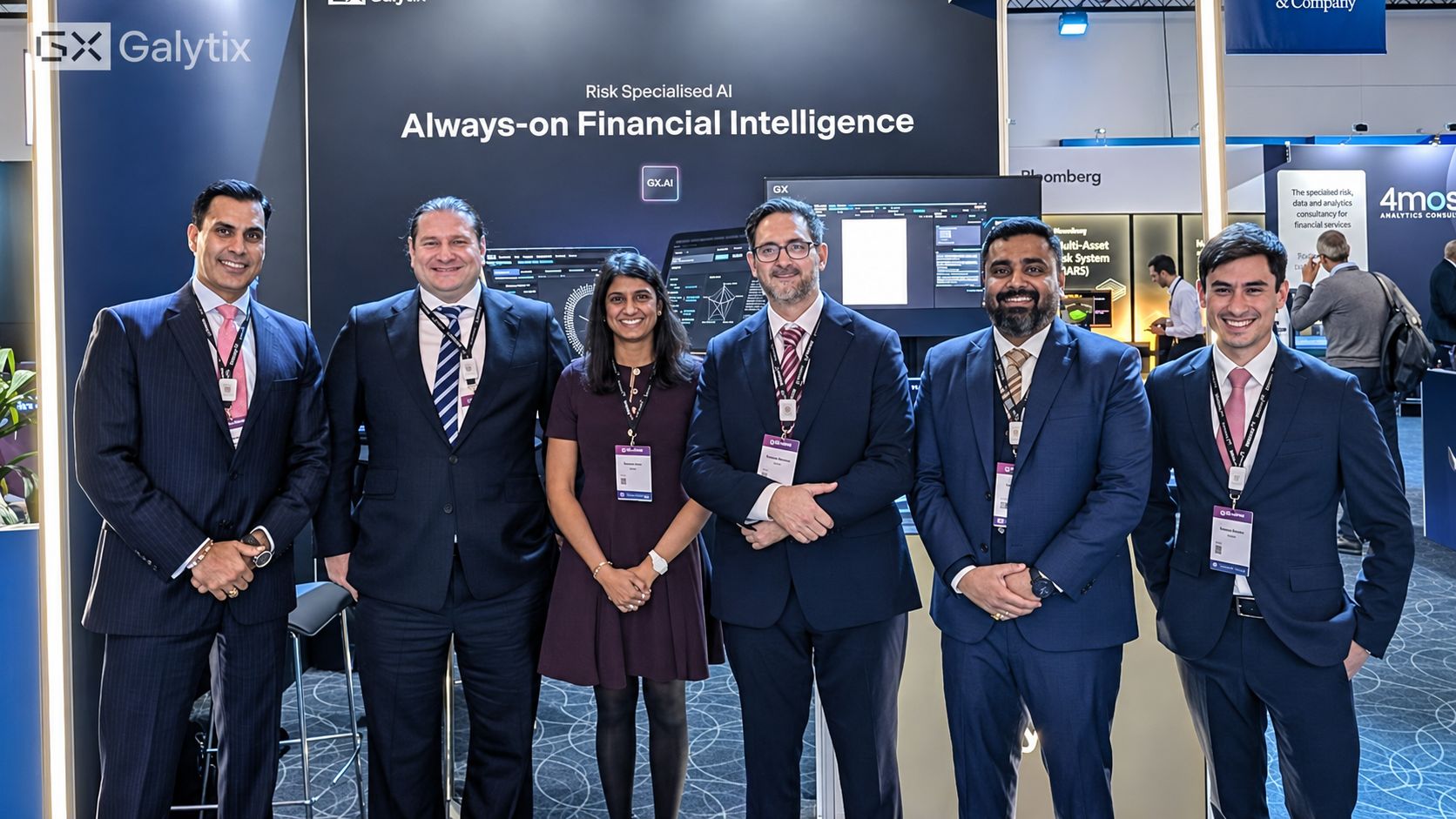
Galytix team at RiskMinds International 2026
The Galytix leadership team was in London for the event. Our CEO, Raj Abrol, moderated a Leadership Forum panel with the chief risk officers of the World Bank Group and the EBRD. Our Chief Growth Officer, Roshni Patel, hosted a session with Société Générale on putting AI into production and connected credit intelligence. At our booth, we showcased our always-on risk intelligence capabilities through demos, meeting risk leaders throughout the week and showing them how our AI is built for financial institutions.
Most of the conversations we joined came back to the same tension. Risk is moving faster than the evidence institutions rely on to judge it, and our two sessions looked at it from opposite sides. Raj's panel expanded on institutions are pricing the perception of emerging market risk or its fundamentals. Roshni's session delved into detail on how a bank can keep its view of credit risk current, and shared across both lines of defence.
Panel discussion on Myths and facts: Credit risk in emerging markets | 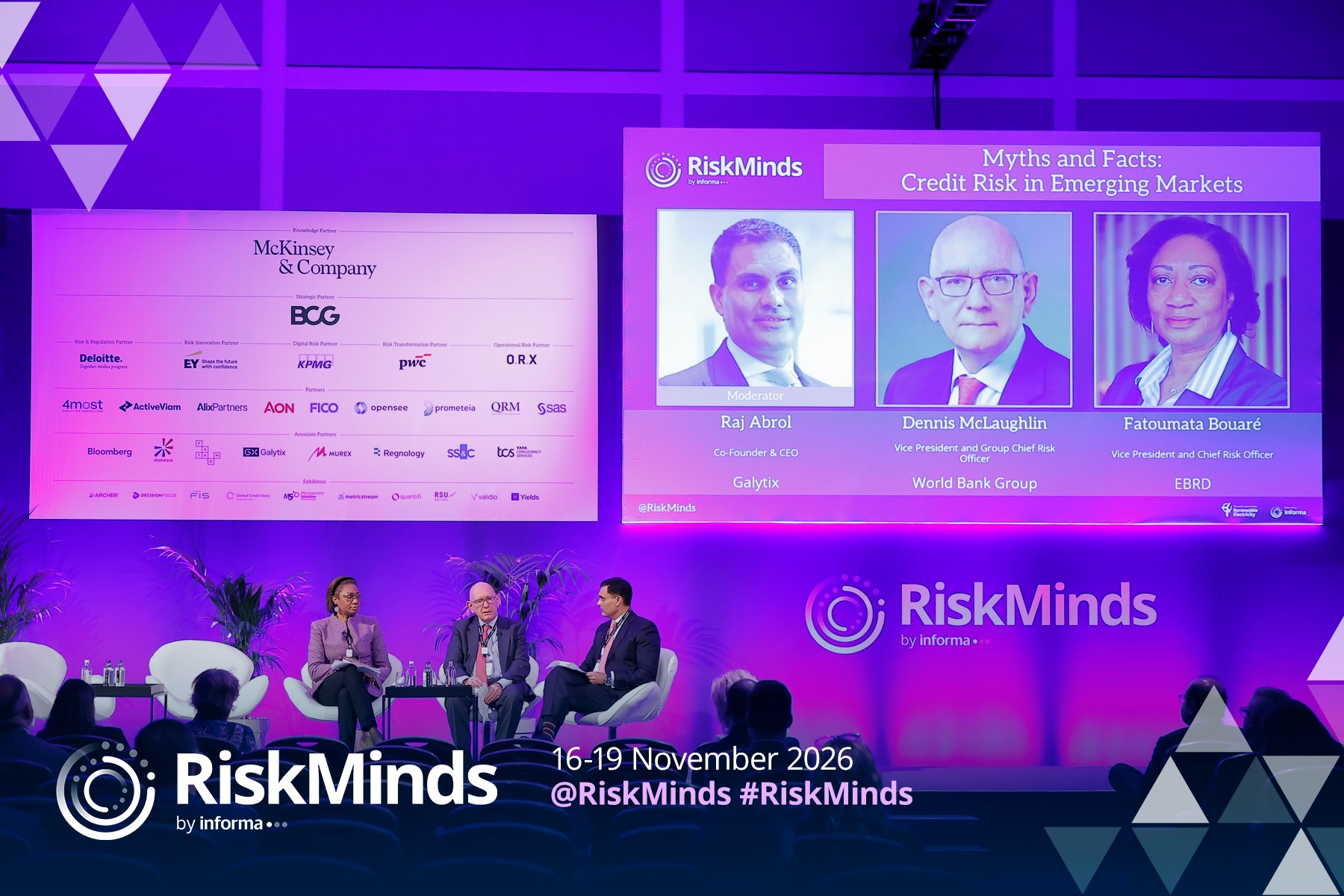 Panel discussion on Myths and facts: Credit risk in emerging markets Myths and facts in emerging market creditRaj centred the conversation around, ‘Are we sometimes pricing the perception of risk rather than the underlying fundamentals?’ Emerging markets are often viewed through a lens of volatility and uncertainty. Broad views of country risk can overshadow how individual borrowers and portfolios perform. The Global Emerging Markets Risk Database (GEMs) offers a counterweight. It pools lending data from multilateral development banks and development finance institutions. That data shows defaults broadly in line with non-investment-grade lending elsewhere, and recoveries higher than the market tends to assume. Raj framed its value in three ways. It replaces anecdote with evidence, gives investors, rating agencies and regulators a common standard to calibrate against, and provides the data to price risk transfers, securitisations and guarantees. |
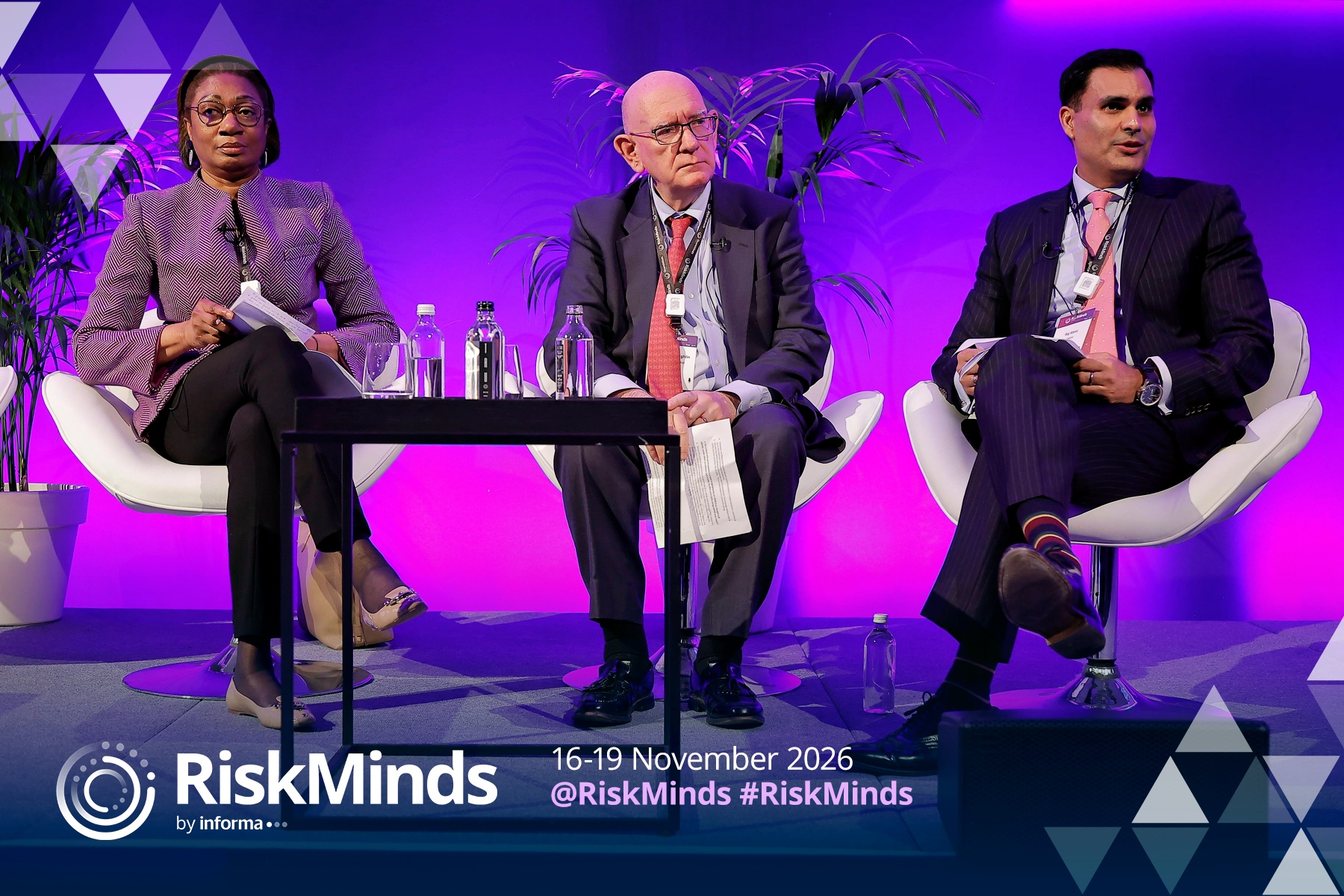 From left to right: Fatoumata Bouare, VP and CRO, EBRD. Dennis McLaughlin, VP and CRO, World Bank Group. Raj Abrol, Co-founder and CEO, Galytix. From there, the panel turned to what evidence changes in practice. It examined why private lenders still hesitate where development banks see viable investments, and how significant risk transfer can free up capital for lending to the real economy. Emerging markets are an extreme case of a wider problem. Private-company data is still patchy, and as one moderator mentioned, every institution is running the same data clean-up project. For AI, data is the real constraint. A model reasons only with what it is given. That is why we treat a connected data foundation, linking borrowers, exposures and external signals, as a priority. |
From left to right: Fatoumata Bouare, VP and CRO, EBRD. Dennis McLaughlin, VP and CRO, World Bank Group. Raj Abrol, Co-founder and CEO, Galytix. |
From left to right: Veronique Thomas, Deputy Head of CPM - Managing Director, Société Générale. Roshni Patel, CGO, Galytix. | 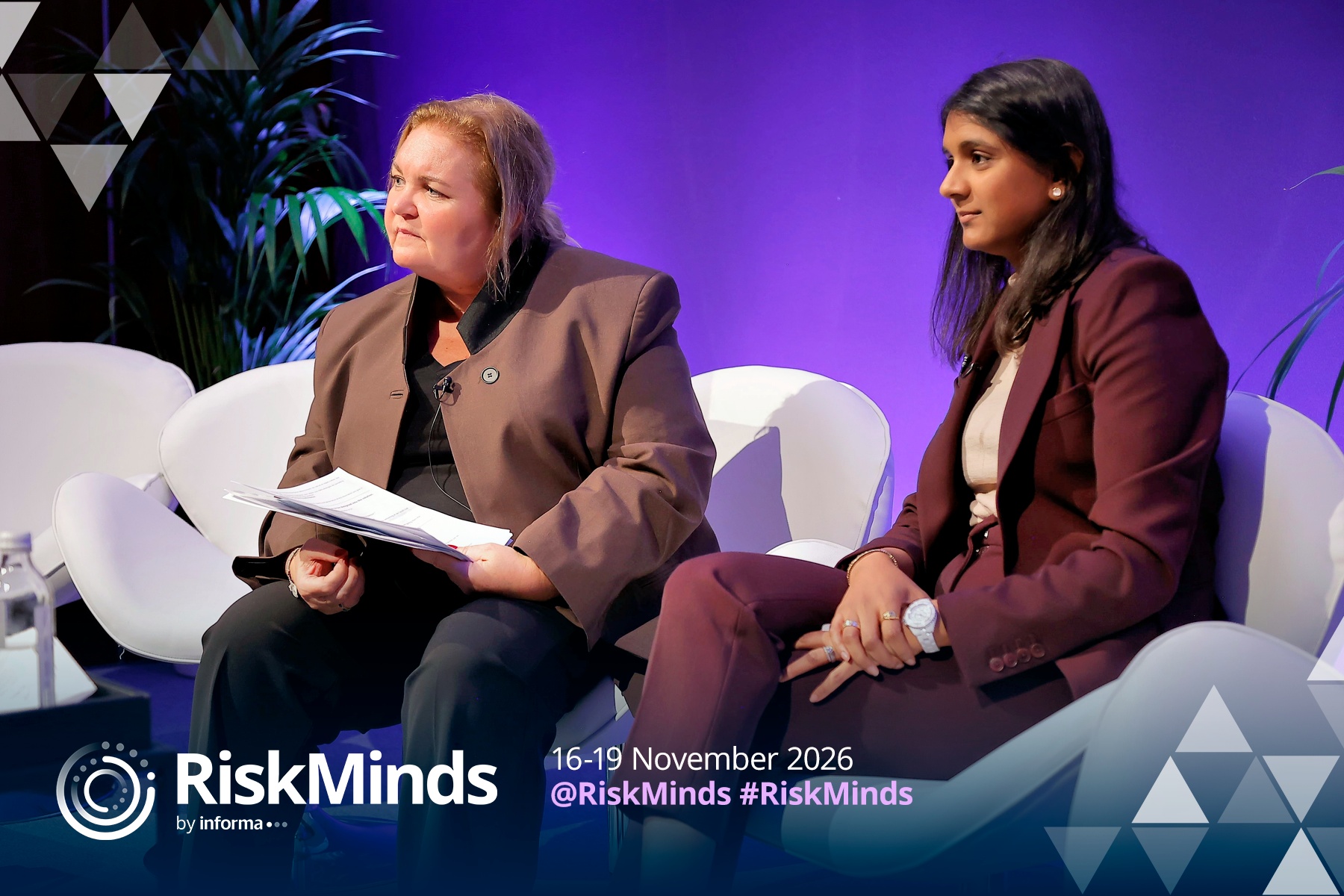 From left to right: Veronique Thomas, Deputy Head of CPM - Managing Director, Société Générale. Roshni Patel, CGO, Galytix. Credit risk doesn't wait for the review cycleOne phrase from the week stayed with us: the zero-day credit event. Borrowed from cybersecurity, it describes a borrower moving to default overnight on a trigger that may sit outside traditional credit factors. Yet many credit portfolios are still reviewed on a quarterly or annual cycle. Roshni's session with Société Générale picked up that problem. A theme we hear across many banks is the move away from fixed quarterly and annual reviews towards always-on credit intelligence that both lines of defence can draw on. The session explored what that looks like in practice, with first- and second-line teams working from the same intelligence, from early-warning signals through to sector views. A central question was how the second line preserves its independent challenge when both draw on a shared view. |
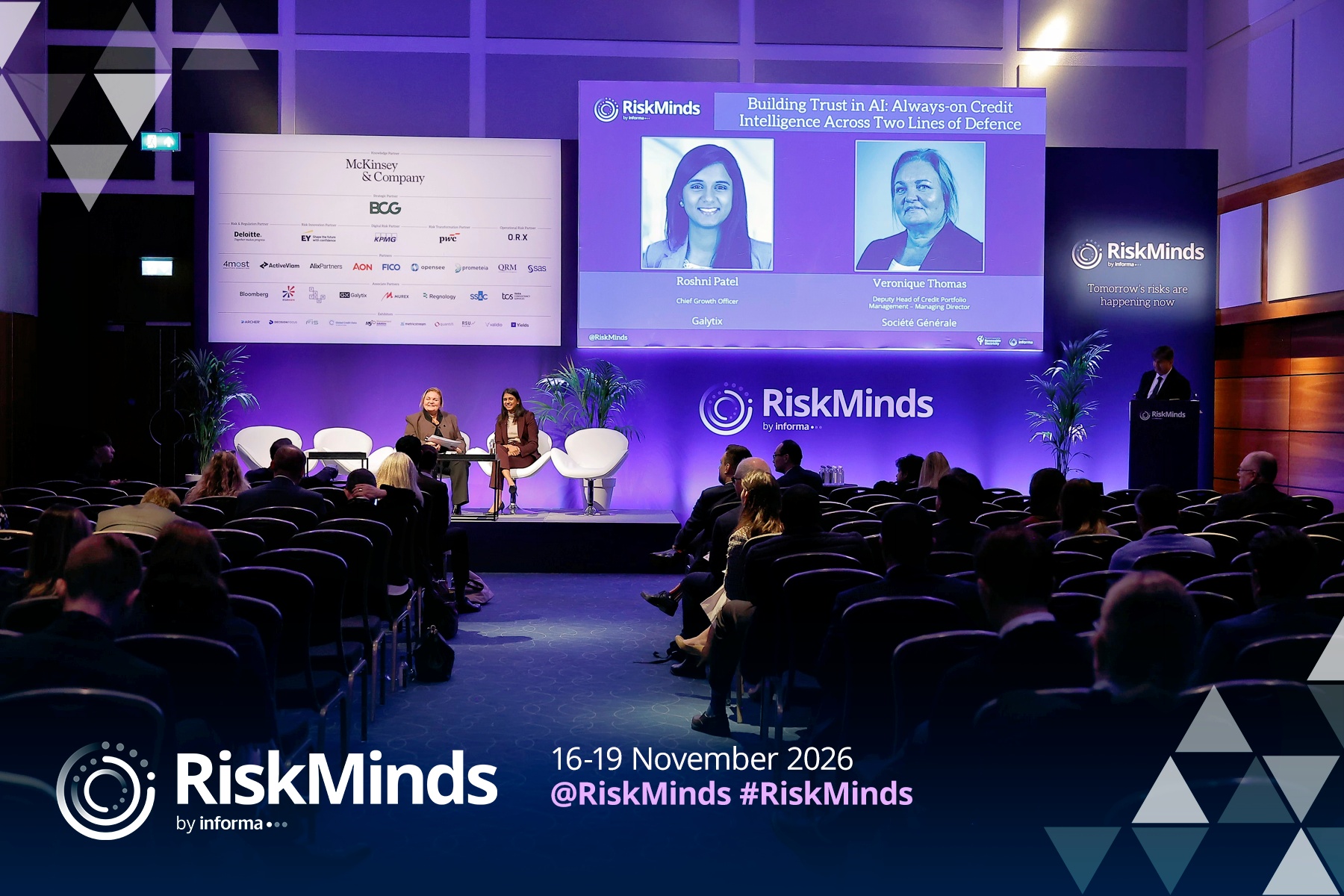 Session on Building trust in AI: Always-on credit intelligence across two lines of defence The session also drew on the bank's experience of putting AI into production across the credit value chain. Trust was another focus: how to earn it from colleagues today, and how to build it with supervisors such as the ECB as expectations on explainability and accountability rise. The wider conversation added a caution: more alerts can simply mean more noise, and credit officers at every level still need to exercise judgement. Some of these concerns come down to how the system is designed. As our early warning work argues, alert quality matters more than volume, and success looks like fewer alerts with a higher share that matter. Explainability and audit trails belong in the build from the first day, and human judgement stays central. Both principles sit at the heart of connected credit intelligence. |
Session on Building trust in AI: Always-on credit intelligence across two lines of defence |
How far perceptions of risk shape institutional risk appetite, and whether CROs are now influencing strategy and future growth. The same question came up on a separate CRO panel, where views ranged from risk as an enabler of strategy to risk as an independent challenge function. One CRO described the function as now holding a strategic seat at the table, and future CRO profiles focussed on experience in AI, data, innovation and transforming the bank to grow. In our view, keeping that seat depends on better evidence, delivered continuously, in a form both lines of defence can trust, challenge and act on.
Our thanks to everyone who joined our sessions and visited our stand. We look forward to continuing the conversations that began there.
If we didn't get the chance to meet in London, our team would be glad to walk you through a demo.