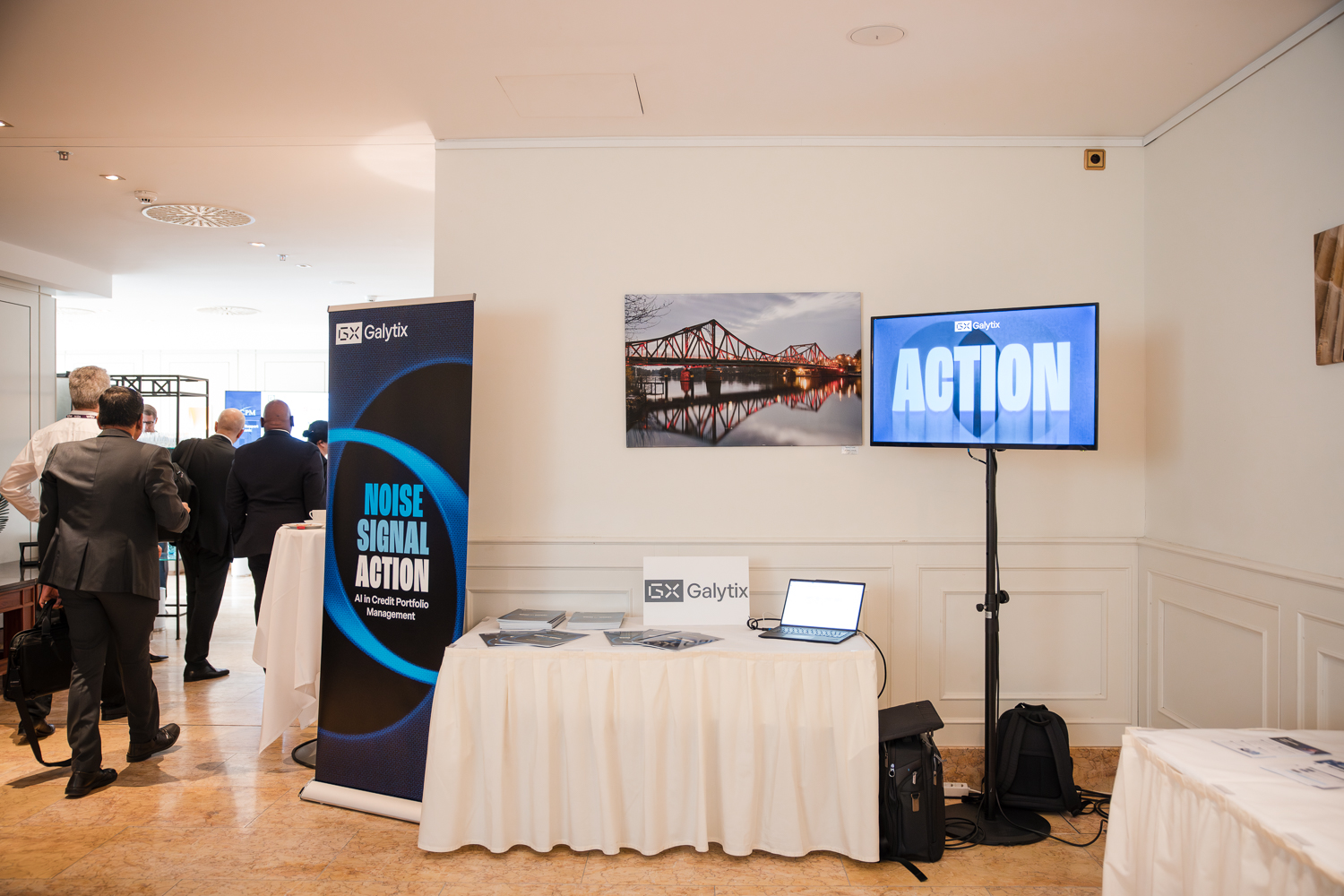
Last week, our CEO Raj Abrol joined Federico Galizia, Vice President and Chief Risk Officer at IFC and Co-Chair of the GEMs Consortium, and Mauricio Masondo, Head of Growth at Galytix, to present at the IACPM 2026 Annual Spring Conference in Berlin.
The session, "From Noise to Signal: AI in Credit Portfolio Management," addressed a critical challenge that how in today's complex risk environment, contingency planning in credit risk is no longer just about detecting signals early, rather it is about being always on, covering the entire credit chain.
The IACPM Spring Conference brings together some of the most senior credit portfolio management practitioners globally, including CROs, CPM heads, and risk leaders from the world's leading institutions. This year, the room was acutely aware of a macro and geopolitical backdrop that's moving faster, and through more channels, than most traditional CPM frameworks were ever designed for.
The conversation kept coming back to the same conclusion: fragmented, task-driven AI won't cut it. What the leading institutions are actually working toward is domain-specialised AI that operates like a Digital Officer continuously running alongside credit and risk teams so that practitioners can spend their time on the decisions that genuinely need human judgement. Nowhere does this matter more than in emerging market credit, where broad sovereign signals have been overstating risk for years.
Here is a summary of their session and key takeaways:
Left to right: Mauricio Masondo, Head of Growth, Galytix and Raj Abrol, CEO, Galytix | 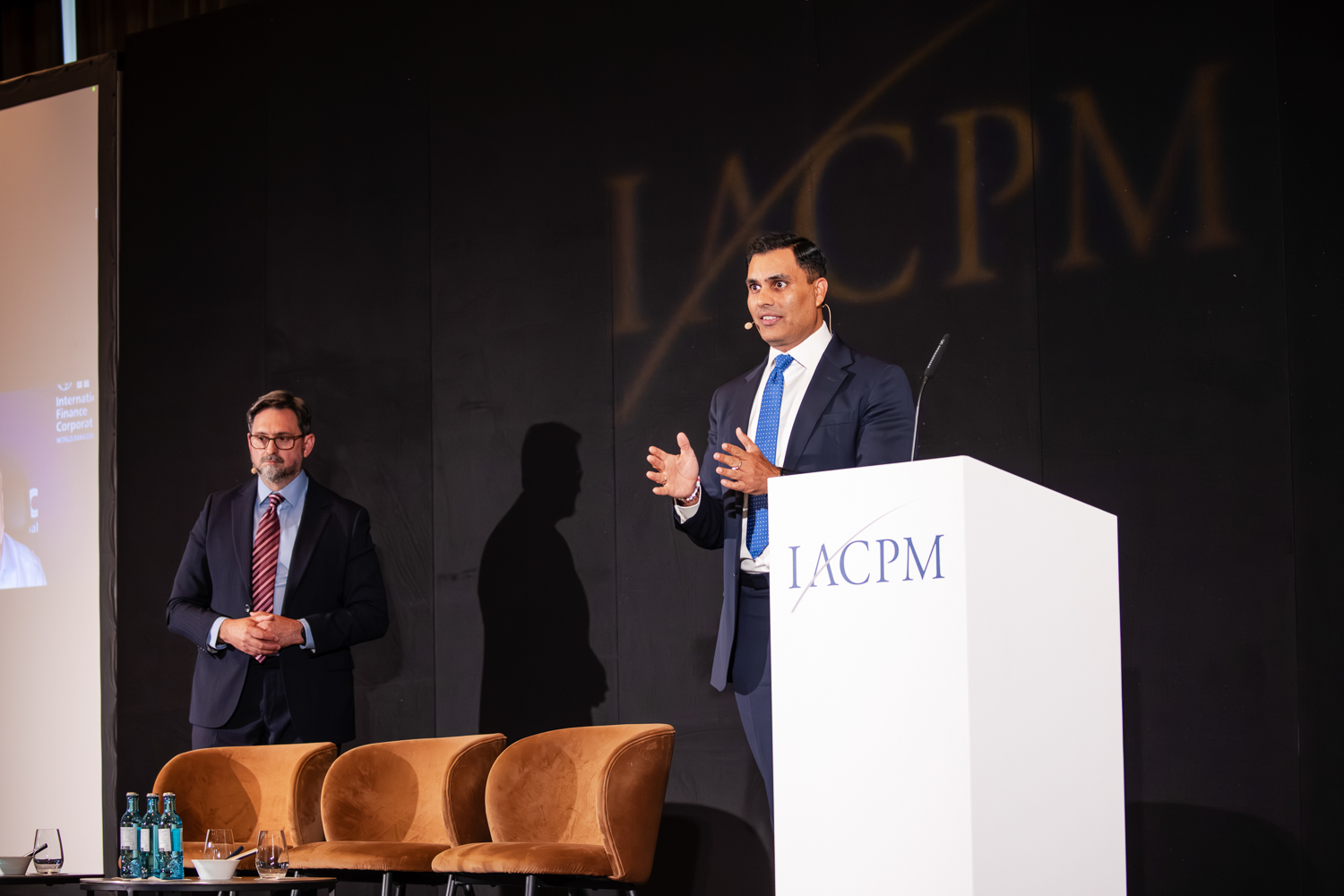 Left to right: Mauricio Masondo, Head of Growth, Galytix and Raj Abrol, CEO, Galytix Left to right: Mauricio Masondo, Head of Growth, Galytix and Raj Abrol, CEO, GalytixEMDE credit risk is being mispriced, and the data is clearThe GEMs Private Sector Lending dataset, covering 1994 to 2024, shows an average annual default rate of 3.54%, broadly in line with S&P "B" and Moody's "B3" rated firms, and an average recovery rate of 72.9%, well above Moody's Global Loans at 70%, Global Bonds at 59%, and JPMorgan EM Bonds at 38%. In some lower-income countries, sovereign ratings overstate private-sector default risk by a factor of four. Granular, portfolio-level evidence is doing more work than broad sovereign signals ever could, and in the current environment, that matters. For Credit and Risk Teams operating in or across emerging markets, this is not a theoretical point. Mispriced risk at the sovereign signal level means portfolios carry exposures that look conservative on paper but are not. |
Federico Galizia, VP and CRO, IFC and Mauricio on stage, IACPM Berlin The AI architecture that actually works in creditThe consensus from Berlin, across sessions and conversations, was consistent. Early Warning Systems only deliver when they are integrated into business processes and applied continuously across sectors and geographies. Piecemeal, task-driven agents operating in a fragmented credit chain won't unlock value at scale. What the leading institutions are building toward is domain-specialised AI that works alongside credit and risk teams across the full credit chain. Raj's framing from the session: ROI compounds across three horizons. Task automation delivers under 10% uplift. Function-to-function agents reach 10 to 25%. Domain-specialised Digital Officers operating across the full credit chain reach 25 to 40%. The breakthrough is not a bigger model. It is specialised intelligence trained on risk-domain knowledge, sitting on a connected data foundation that propagates signals into credit decisions in real time. Data runs AI. Not the other way around. |
Federico Galizia, VP and CRO, IFC and Mauricio on stage, IACPM Berlin |
Galytix team at IACPM, Berlin | Connected infrastructure is now table stakesBeing always on requires more than a good model. It requires an end-to-end credit chain built on a unified credit knowledge base, with continuous data quality management that reflects the institution's specific rules, governance, and risk appetite. Not periodic refreshes or siloed feeds. A live infrastructure that propagates news, sentiment, quantitative triggers, and geopolitical signals into credit decisions the moment they become available. For Credit and Risk Teams, this is the operational question that determines whether AI investments compound or stall. |
GEMs x Galytix: Partnership in actionGalytix and PwC Luxembourg were selected via public tender as AI data aggregator partner for GEMs. The AI platform has been delivered, the 2026 GEMs data collection is under way, and new GEMs publications are set to launch in Q4 2026. Bringing 41 years of EMDE default and recovery data, collected across 29 different bank standards and rules, into a specialised, auditable AI layer is a meaningful step forward for cross-portfolio insight at scale. It is also precisely the capability the current geopolitical environment demands. |
Galytix: From Noise to Action: AI in Credit Portfolio Management |
The conversations from Berlin pointed in a consistent direction. The geopolitical environment is accelerating the signal load on credit portfolios, and the institutions best placed to respond are those that have already moved from task-level automation to connected, domain-specialised intelligence.
If you are looking to deploy domain-specialised AI across your credit chain, we would be glad to show you what that looks like in practice.